
No items in cart right now!
Working Hours - 8 AM To 8 PM
Working Hours - 8 AM To 8 PM
 December 22
Your car battery plays a crucial role in keeping your vehicle running smoothly. It powers the ignition, lights, air conditioning, infotainment system, and other electrical components. When the battery starts to weaken, you may face slow starts, electrical failures, or sudden breakdowns. That’s why learning how to Check Car Battery health at home is essential for every car owner.
Many drivers assume that battery testing requires a visit to a workshop. In reality, there are several easy and reliable ways to assess battery health at home using basic tools or simple observations. Regular checks can help you identify problems early, extend battery life, and avoid unnecessary expenses.
This detailed guide explains three effective ways to check car battery health at home, along with warning signs, maintenance tips, and expert advice to keep your vehicle dependable year-round.
A healthy battery ensures reliable engine starts and consistent electrical performance. When a battery weakens, it places extra stress on the alternator and starter motor. Over time, this can lead to expensive repairs beyond just replacing the battery. Just like many drivers now prefer to buy tyres online for convenience and better value, staying proactive with battery maintenance helps avoid unnecessary costs and sudden vehicle issues.
By learning to Check Car Battery condition regularly, you can:
Prevent unexpected breakdowns
Improve fuel efficiency
Protect electrical components
Save money on emergency repairs
Several factors can reduce battery lifespan:
Extreme heat or cold weather
Short trips that don’t allow full charging
Corrosion on battery terminals
Leaving lights or accessories on
Natural wear due to age
Most car batteries last between three and five years. In hotter climates, batteries may fail sooner because heat accelerates internal chemical reactions.
A visual inspection is the simplest way to evaluate battery condition. It requires no tools and can be done in just a few minutes.
Open your car’s hood and locate the battery. Look carefully for visible signs of damage or wear.
Battery terminals should be clean and firmly attached. Look for:
White, blue, or green powdery deposits (corrosion)
Loose or damaged clamps
Dirt and grease buildup
Corroded terminals can interrupt the electrical connection, leading to weak starts or charging issues. Cleaning them with baking soda and water often restores proper performance.
Examine the battery casing for:
Cracks or leaks
Bulging or swollen sides
Melted plastic near terminals
A swollen or leaking battery indicates internal damage and should be replaced immediately for safety reasons.
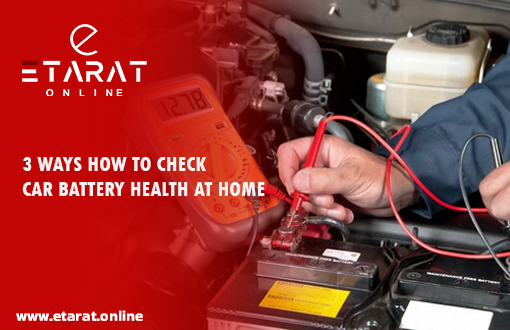
Using a multimeter is one of the most accurate methods to check battery health at home. It provides clear numerical readings that indicate the battery’s charge level.
Turn off the engine and all electrical accessories
Set the multimeter to DC voltage (20V range)
Connect the red probe to the positive terminal
Connect the black probe to the negative terminal
Read the voltage displayed on the screen
If the voltage drops significantly after starting the engine, it may also indicate alternator issues. This method is ideal for drivers who want precise results without visiting a service center.
This traditional method helps identify battery weakness without specialized tools.
Turn off the engine
Switch on the headlights
Observe brightness for a few minutes
If the headlights dim quickly or flicker, the battery may not be holding a proper charge.
Start the engine and listen carefully:
Slow cranking sounds
Clicking noises
Delayed engine start
These signs usually indicate insufficient battery power and suggest it’s time to recharge or replace the battery.
Even before testing, your car may show symptoms of a failing battery:
Slow engine starts
Dashboard battery warning light
Dim headlights
Electrical malfunctions
Frequent jump-start requirements
Ignoring these signs can leave you stranded at inconvenient times.
How Often Should You Check Your Car Battery?
Experts recommend checking your battery:
Every three months
Before long road trips
At the start of summer or winter
After three years of usage
Routine checks help ensure consistent performance and reduce sudden failures.
Good habits can significantly increase battery lifespan:
Drive longer distances occasionally to fully recharge the battery
Turn off lights and accessories before switching off the engine
Keep battery terminals clean and tight
Park in shaded or covered areas
Avoid excessive jump-starting
Preventive care not only saves money but also improves driving reliability.
Yes, visual inspections and headlight tests are effective for early detection.
Most batteries last between three and five years.
Yes, it’s easy to use and safe when instructions are followed.
Anything below 12.0 volts usually means the battery is failing.
Yes, it can strain the alternator and starter motor.
If the battery is old or repeatedly weak, replacement is recommended.
Learning how to Check Car Battery health at home empowers you to take control of vehicle maintenance. A reliable battery ensures smooth starts, consistent electrical performance, and peace of mind during daily drives or long journeys.
However, battery health is only one part of overall vehicle safety. Tyres play an equally important role in handling, braking, and fuel efficiency. Many car owners now prefer to Buy Tyres Online for convenience, competitive pricing, and a wide selection of brands. For drivers in Dubai, choosing a trusted Al Quoz tyre shop ensures professional installation, expert guidance, and long-lasting tyre performance—helping you stay safe and confident on the road. Additionally, staying informed about tire maintenance
leave a comment